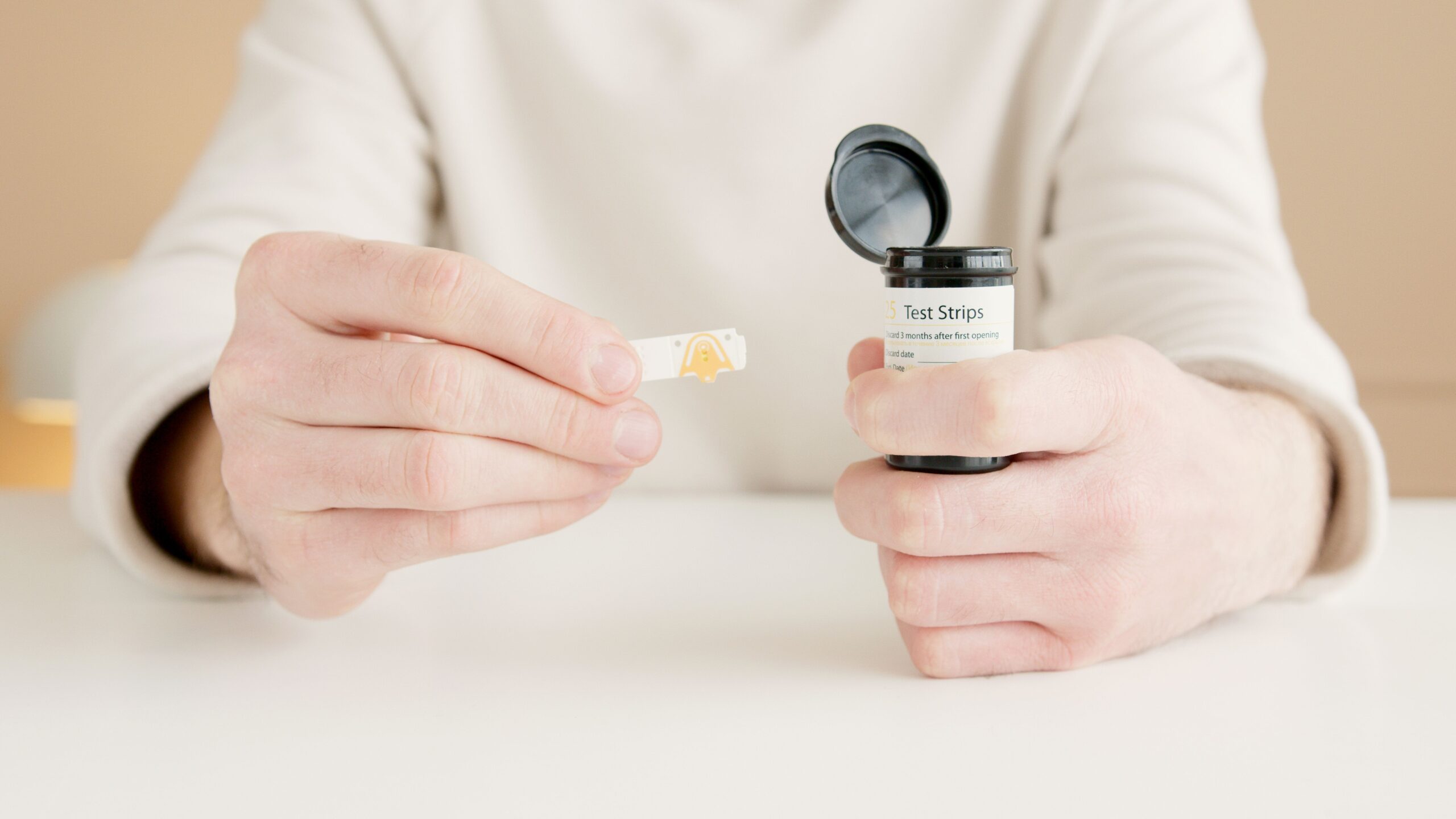
Is it legal to sell extra diabetic test strips for cash? 2026
If you have unopened diabetes supplies sitting in a cabinet, you may be wondering whether you can turn them into

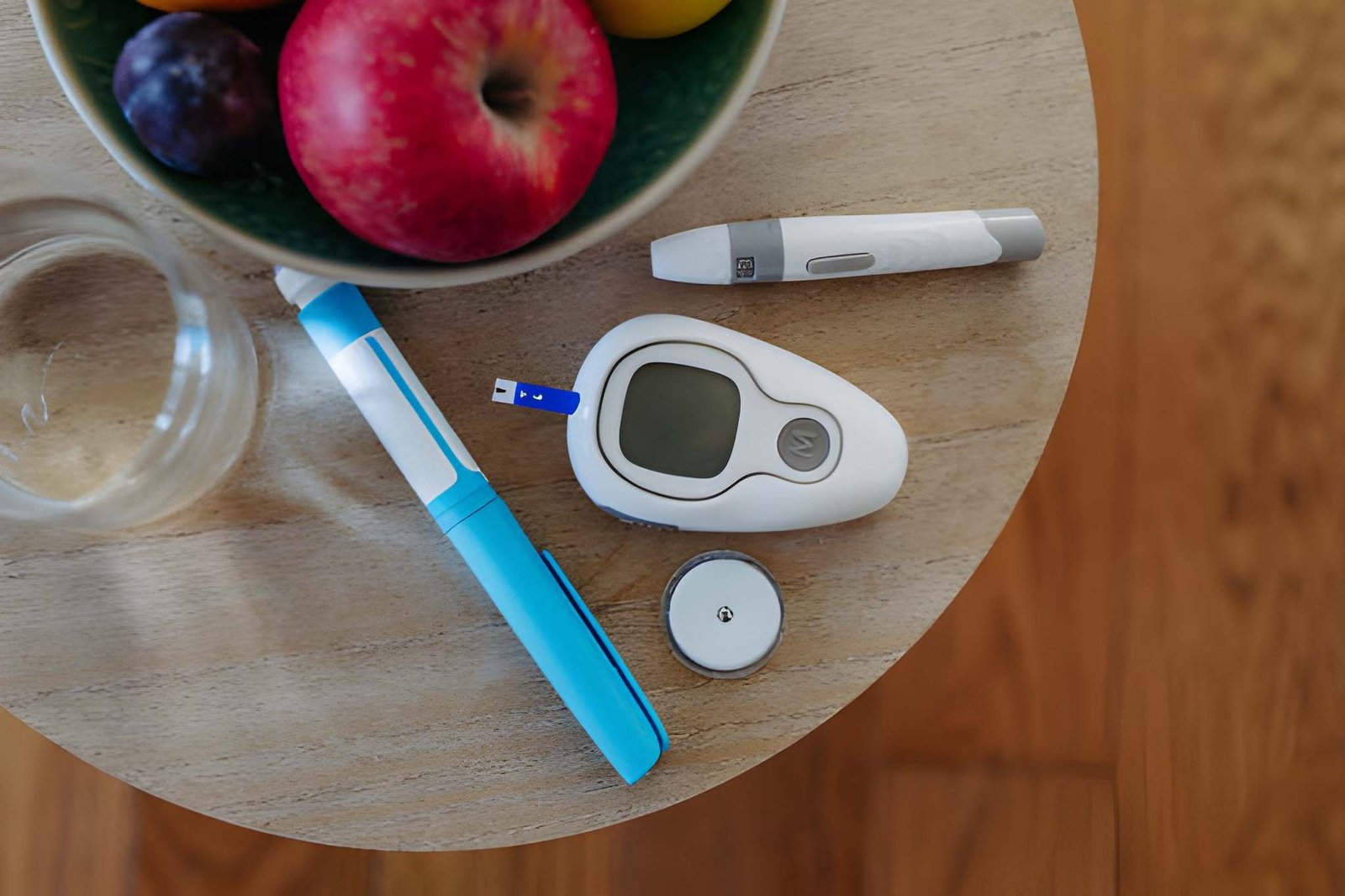
A practical guide to checking unopened continuous glucose monitor supplies before buying, selling, or using them
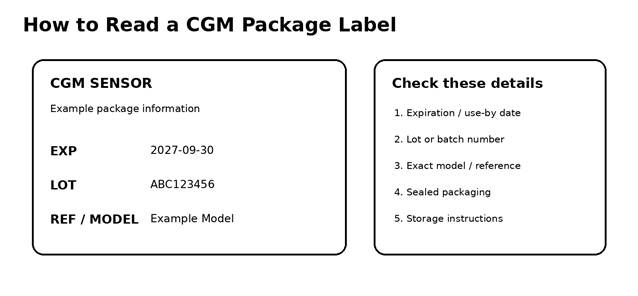
Illustration: common information found on a medical-device package label.
Continuous glucose monitor sensors are medical devices, and their packaging contains information that helps identify the exact product. Before a sensor is bought, sold, or used, it is worth checking the date, product identification, lot information, and condition of the package.
The exact labels vary by manufacturer and product. A box may show an expiration date, use-by date, lot or batch number, model or reference number, barcode or UDI information, and storage instructions. These details help distinguish one product from another and can be important for traceability.
For an online quote or listing, providing the exact information printed on the box is better than relying on a generic product name or an approximate number of months remaining.
Look for markings such as EXP, Expiration, Use By, or similar manufacturer-specific wording. Date formats can differ, so read the label carefully rather than assuming every package uses the same format.
If only a month and year are printed, follow the manufacturer’s labeling instructions for interpreting that date. When submitting a quote request, use the exact date shown on the packaging whenever possible.
A CGM brand can have multiple generations, sensors, readers, transmitters, or regional variants. The product name alone may not be enough to identify the exact item. Look for the model, reference, product code, or other identifying information.
When creating an online listing or quote request, use the exact name shown on the package. This helps prevent one sensor generation from being confused with another.
Many medical-device packages include a lot or batch identifier used for product traceability. Keep this information intact and do not cover or alter it when photographing a package.
The lot number is not the expiration date. It identifies a production batch, while the expiration or use-by date is a separate piece of information.
For unopened CGM supplies, inspect the package for broken seals, punctures, moisture exposure, or other visible damage. Do not assume a damaged package is suitable for use; follow the manufacturer’s instructions and seek appropriate guidance.
CGM products have manufacturer-specific storage requirements. Temperature limits and other conditions can vary by device. Do not apply one generic storage rule to every CGM.
If you are selling unopened sensors, store them according to the manufacturer’s instructions and provide accurate information about the product’s condition.
The package expiration date is not the same as the number of days a sensor can be worn after activation. Wear duration is a separate product specification and varies by model.
A package can have a long shelf life while the individual sensor has a much shorter wear period after it is started. Always check the instructions for the specific CGM model.
When buying or selling CGM supplies, an exact date is easier to verify than a broad category. A label such as ‘expires September 2027’ gives a customer a concrete reference point they can compare directly with the box.
This is also useful for online quote forms. Date-based options can make it easier for sellers to match what they see on the package without having to calculate how many months remain.
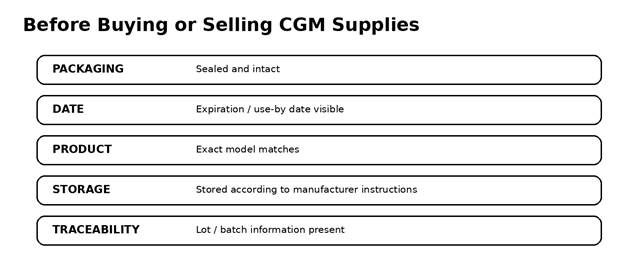
A simple checklist for evaluating unopened CGM supplies.
If you have unopened CGM products that you no longer need, having the package details ready can make the quote process faster. A clear photo of the box, exact product name, and expiration date can help identify what you have.
At BuyMyCGM, sellers can provide the product and expiration information needed to request a quote. Always provide accurate information from the packaging so the product can be evaluated correctly.
Where is the expiration date on a CGM box?
It varies by manufacturer and product. Look around the outer box and individual sensor packaging for markings such as EXP, Expiration, Use By, or similar wording.
Is the lot number the expiration date?
No. The lot or batch number identifies a production batch for traceability. The expiration or use-by date is separate.
Can I use a CGM after the printed expiration date?
Do not assume an expired medical device is appropriate for use. Follow the specific manufacturer’s labeling and instructions.
Do all CGMs have the same shelf life?
No. Shelf life and expiration labeling vary by manufacturer and product.
Does expiration date affect the value of a CGM sensor?
It can. Remaining shelf life may be one factor a buyer considers, along with model, packaging condition, demand, and eligibility requirements.
This article is for general informational purposes and is not medical advice. CGM products are regulated medical devices, and features, storage requirements, labeling, indications, expiration instructions, and eligibility can vary by manufacturer and location. Always follow the labeling and instructions for the specific product. If you have questions about whether a device is safe or appropriate to use, contact the manufacturer or a qualified healthcare professional.
If you have unopened diabetes supplies sitting in a cabinet, you may be wondering whether you can turn them into
If you live with diabetes, you know how quickly testing supplies can pile up. Maybe your doctor changed your meter,